
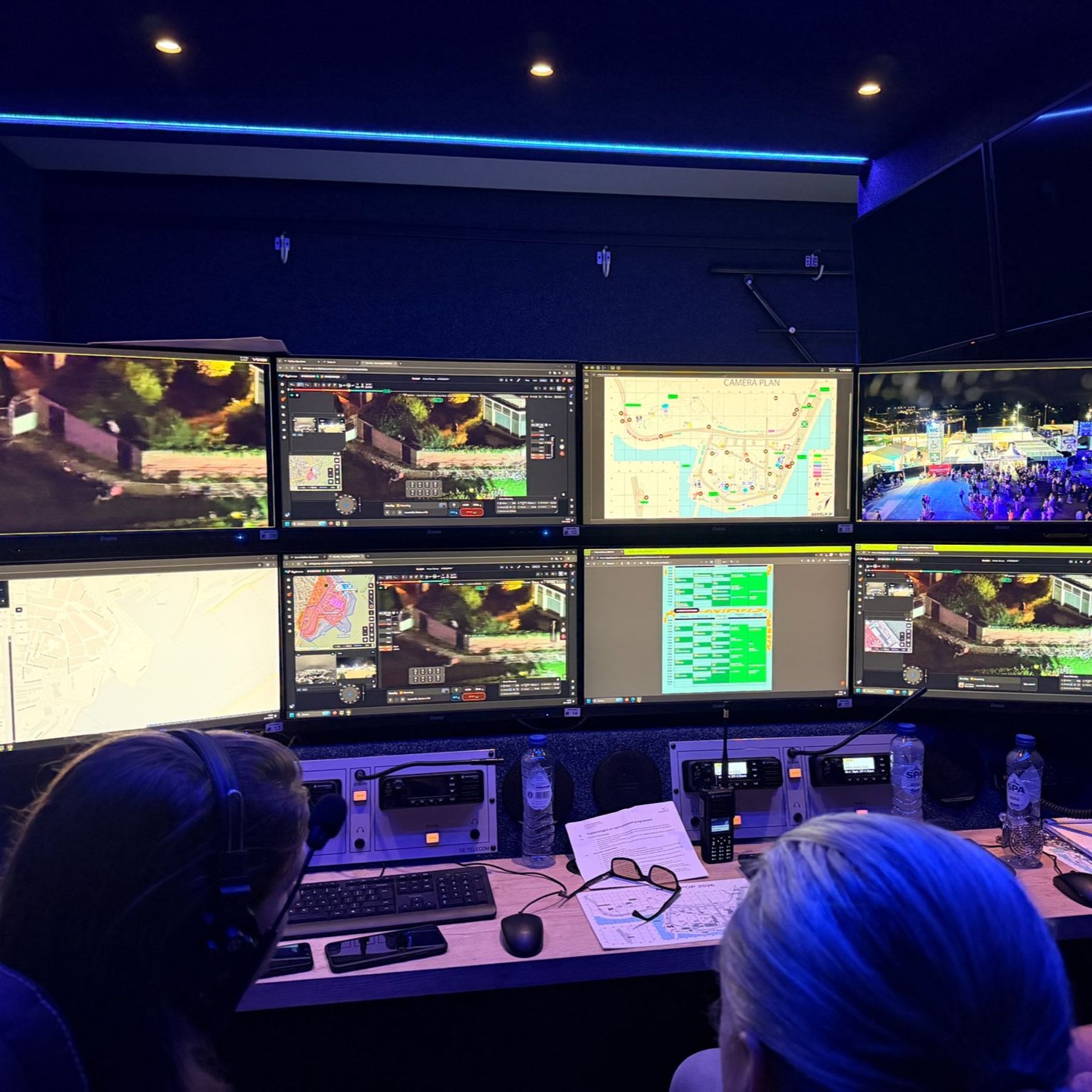
Every year, Appelpop brings tens of thousands of people to Tiel. Flying an autonomous drone over a crowd that size is one of the hardest things to do in this industry, not because of the flight, but because of everything it takes to be allowed to fly it. At Appelpop 2026, Antea Group did exactly that, running a two-day proof of concept over a live festival.
Watching a Festival From the Ground Has Limits
For most event safety teams, getting eyes in the air still means putting people in motion. A pilot travels to the site, sets up, and launches, and only then does aerial intelligence reach the people making decisions. At a festival moving in real time, those steps cost exactly the minutes that matter.
Autonomy changes that equation, but only if you can actually fly. Operating a drone autonomously over tens of thousands of uninvolved people sits at the top end of what aviation regulators allow, which is why most operators never attempt it. The hard part is not the flight. It is building an operation that is allowed to fly it, repeatedly, within the rules.
That is what Antea Group set out to prove at Appelpop, working with partner Geodirect and Aerial Intelligence on a DJI drone-in-a-box orchestrated on FlytBase.
How the Drone Ran Across Two Days
Across both days, the drone ran fully autonomous, AI-driven missions with no pilot at the controls. It launched from the box, flew its route, and returned to recharge on its own, cycle after cycle, with a thermal camera adding a second layer of coverage in successful trials alongside the standard feed.
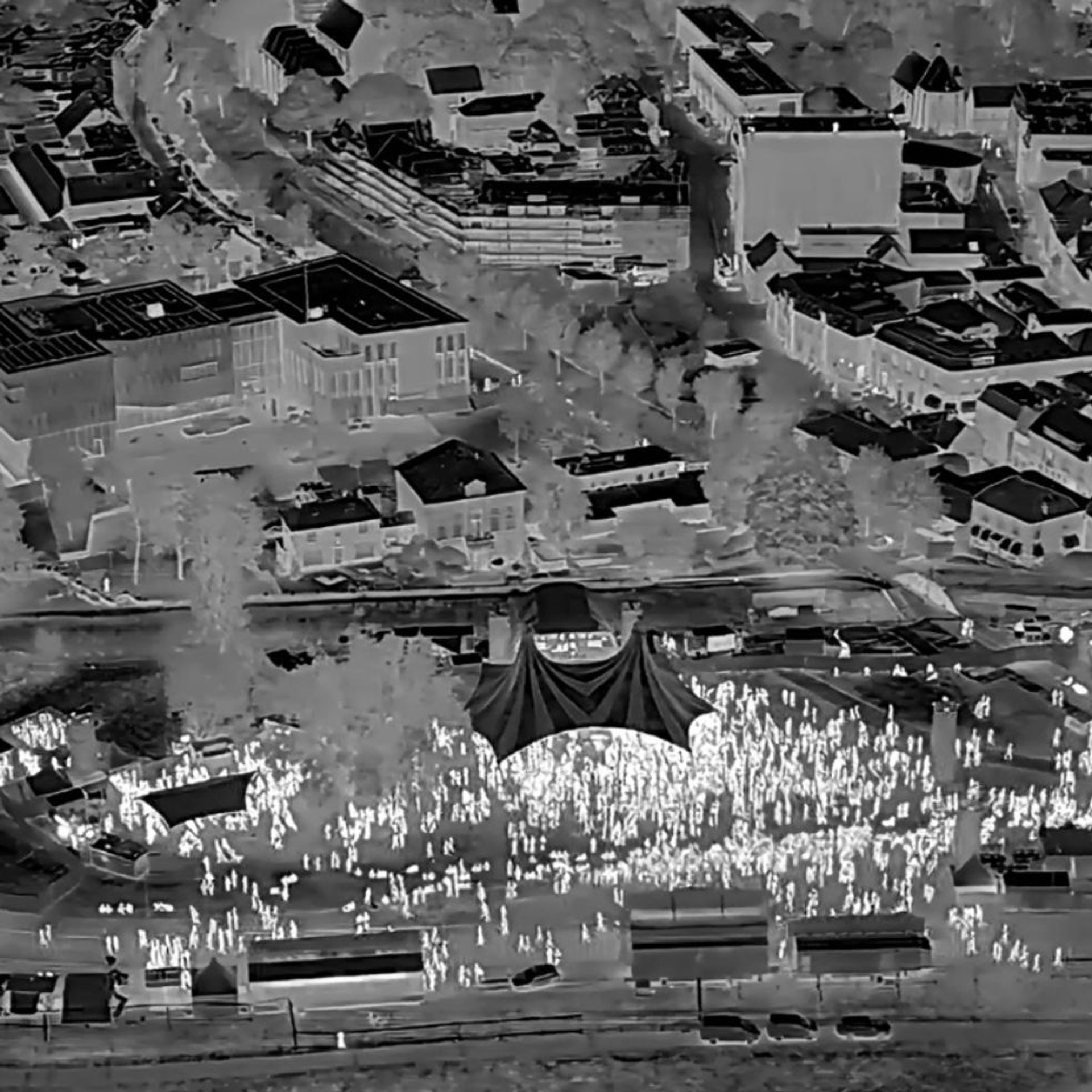
What made that possible was not the two days of flying. It was everything before takeoff. Autonomy over a live crowd is not something you switch on with a one-time installation. It takes a deliberate operational design, close coordination with regulators, and a data pipeline that turns what the drone sees into information people can act on. Antea ran this proof of concept to the standard of a full installation, preceded by intensive coordination and joint decision-making, so it could scale from here rather than start over.
The step to an automated workflow is not achieved with a one-time installation. Technology, regulations and operations came together, and autonomy and AI were actually allowed to do their job. - Timothy Wattimena, Geodirect, which supplied the DJI hardware, the FlytBase orchestration, and the integration behind the autonomy.
From Live Footage to Faster Decisions
The point of the flights was never the footage. It was the decisions the footage enabled, while the event was still happening.
Every mission fed a command center where a crowd management team watched live and acted on what they saw, across three jobs at once: crowd management, traffic management, and security. They could see how visitors moved across the grounds, where parking was filling up, and how the access roads were flowing, and respond before a pinch point became an incident.
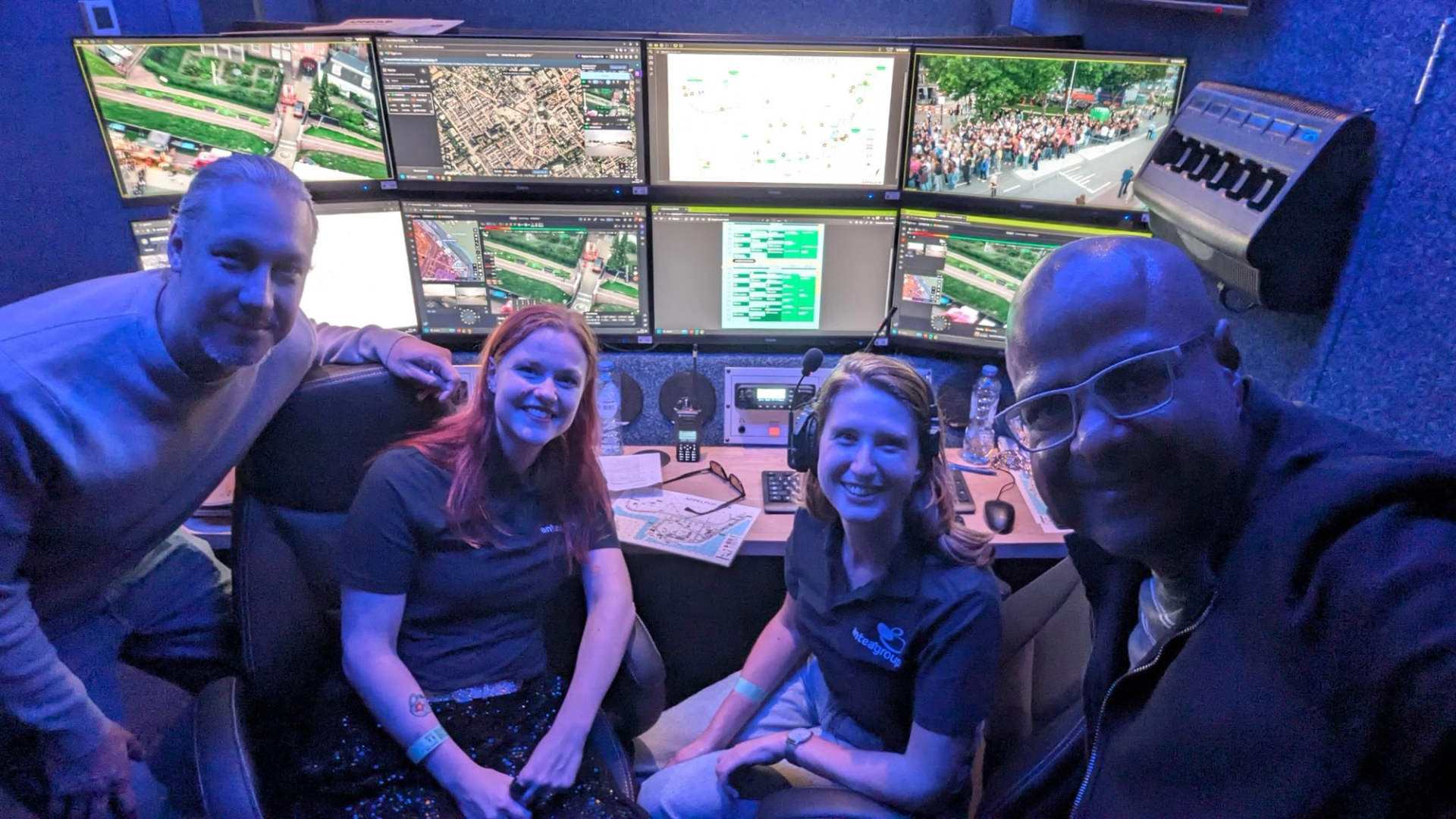
From the air you see patterns that are simply invisible from the ground. Those insights help organisers make faster and better-founded decisions during an event. - Rene Sloof, Project Manager SAVE, Antea Group.
For Antea, Appelpop was a proof of concept, not a finished system, and a deliberate one, built to the standard of a full installation so the team can scale from it. Further trials in industry are already planned.
That is the shift worth paying attention to. The value of autonomous drones is not faster takeoffs. It is making aerial intelligence available at the moment decisions are made, and doing it reliably enough, and within regulation, to run again tomorrow. Managing the aircraft, docks, and missions that make that repeatable is the operational layer FlytBase provides, underneath deployments like this one.
Deployment delivered by Antea Group with partners Geodirect and Aerial Intelligence, powered by FlytBase.
Source: Based on a LinkedIn post by Timothy Wattimena, Geodirect, following Appelpop 2026.