
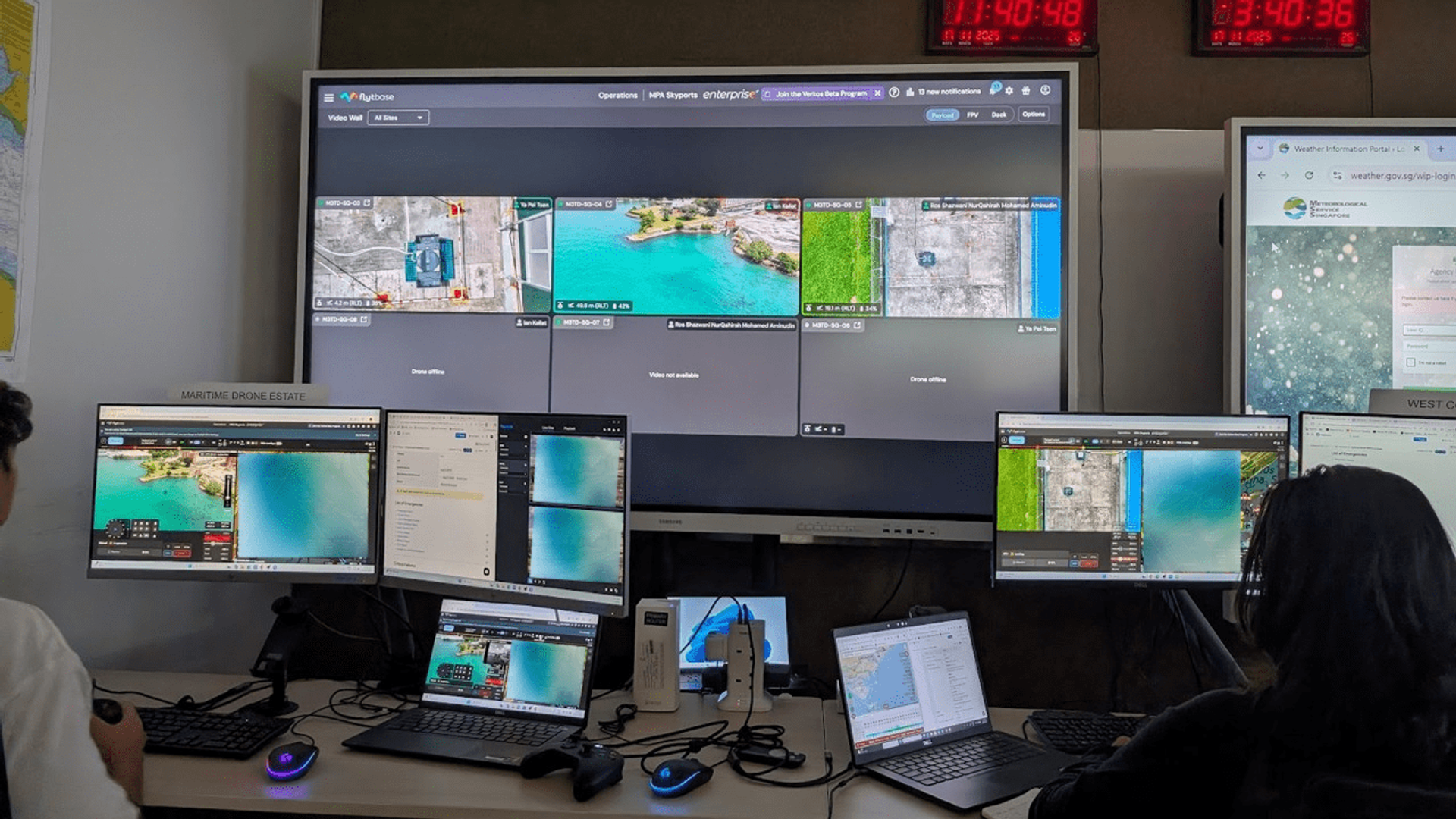
Managing surveillance across one of the world's busiest ports means watching thousands of vessel movements every day. For Singapore's Maritime and Port Authority (MPA), doing that consistently meant getting eyes on the water quickly, across multiple locations, without deploying crews every time a drone was needed.
By replacing on-site drone operations with remotely managed autonomous systems, MPA cut drone deployment time by up to 80% and extended surveillance coverage from 400 meters to 5 kilometers. What started as a faster way to launch drones has since evolved into a routine aerial surveillance programme supporting maritime safety, infrastructure inspections, environmental monitoring, and incident response across Singapore's port waters.
When Surveillance Depends on People, Coverage Has Limits
Traditional drone operations have a built-in constraint.
Every mission begins with sending a pilot to the launch site. The aircraft is prepared, the flight is completed, and the crew packs up before moving to the next location. As surveillance requirements grow, so does the number of people needed to keep drones in the air.
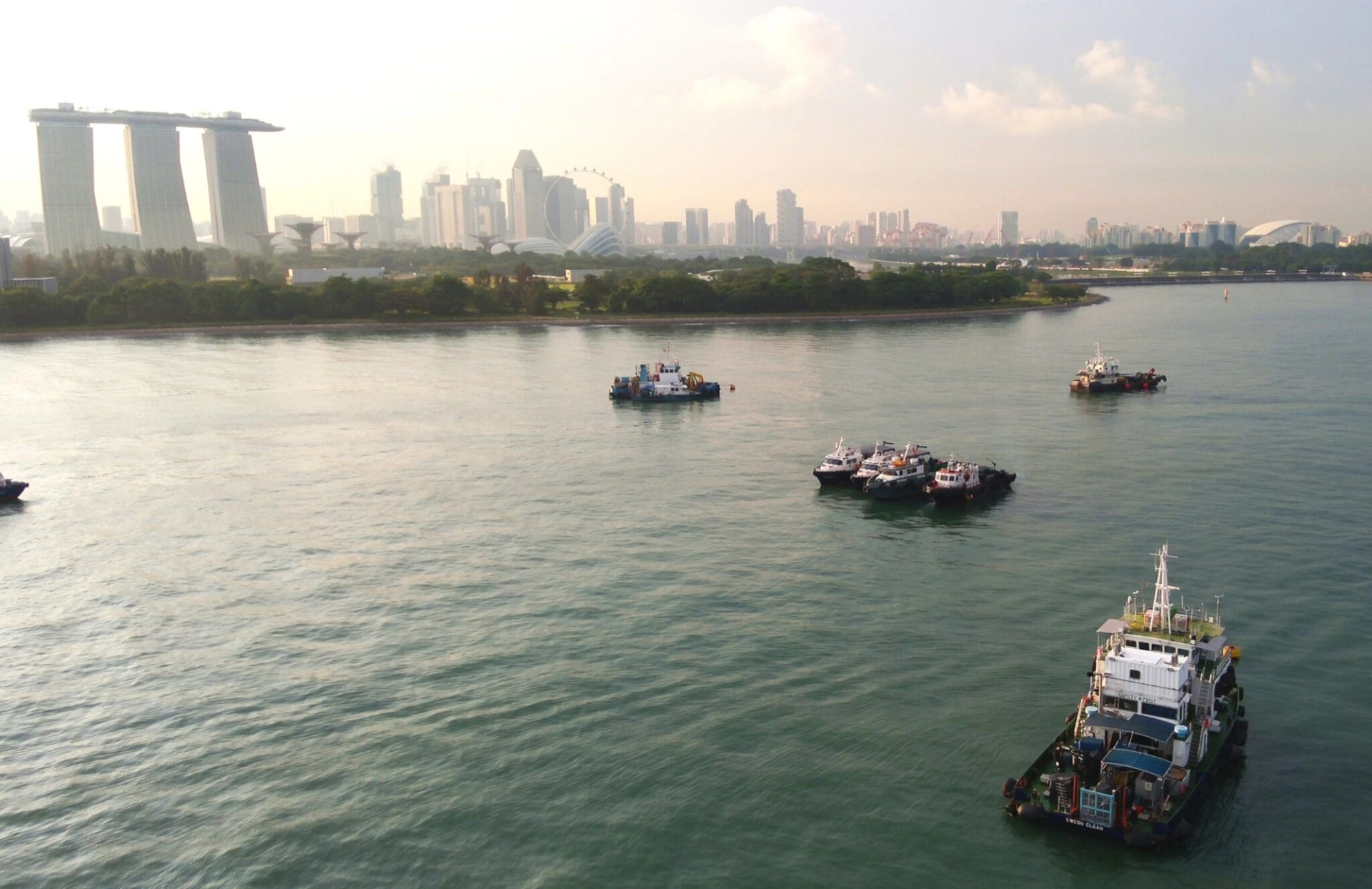
For MPA, this created three operational challenges. Coverage was limited by how far pilots could safely fly. Responding to an incident depended on how quickly teams could reach the launch site. Expanding surveillance meant adding more crews and more patrol resources.
Coverage scaled with headcount, and headcount has a ceiling.
From Individual Drone Flights to Routine Operations
Instead of deploying more crews, MPA changed the operating model.
Operators no longer needed to travel to the waterfront every time a drone was required. Autonomous drones could launch remotely, reducing deployment time by up to 80% while extending surveillance coverage from roughly 400 meters to 5 kilometers.
“Equipped with high-resolution cameras and video analytics, these drones provide real-time insights to our patrol craft and partner agencies. This allows us to do targeted checks and inspections and allows us to better optimise the use of our resources.” - Mr Chua Chun Kang, Deputy Director at MPA’s Maritime Space and Drone Capability Department
The programme has since expanded beyond responding to individual incidents. Routine aerial patrols now operate across multiple waterfront locations, providing continuous visibility of vessel movements, port infrastructure, and surrounding waters. Patrol vessels remain essential, but instead of spending valuable time on routine observation, they can respond to verified incidents with live aerial intelligence already in hand.
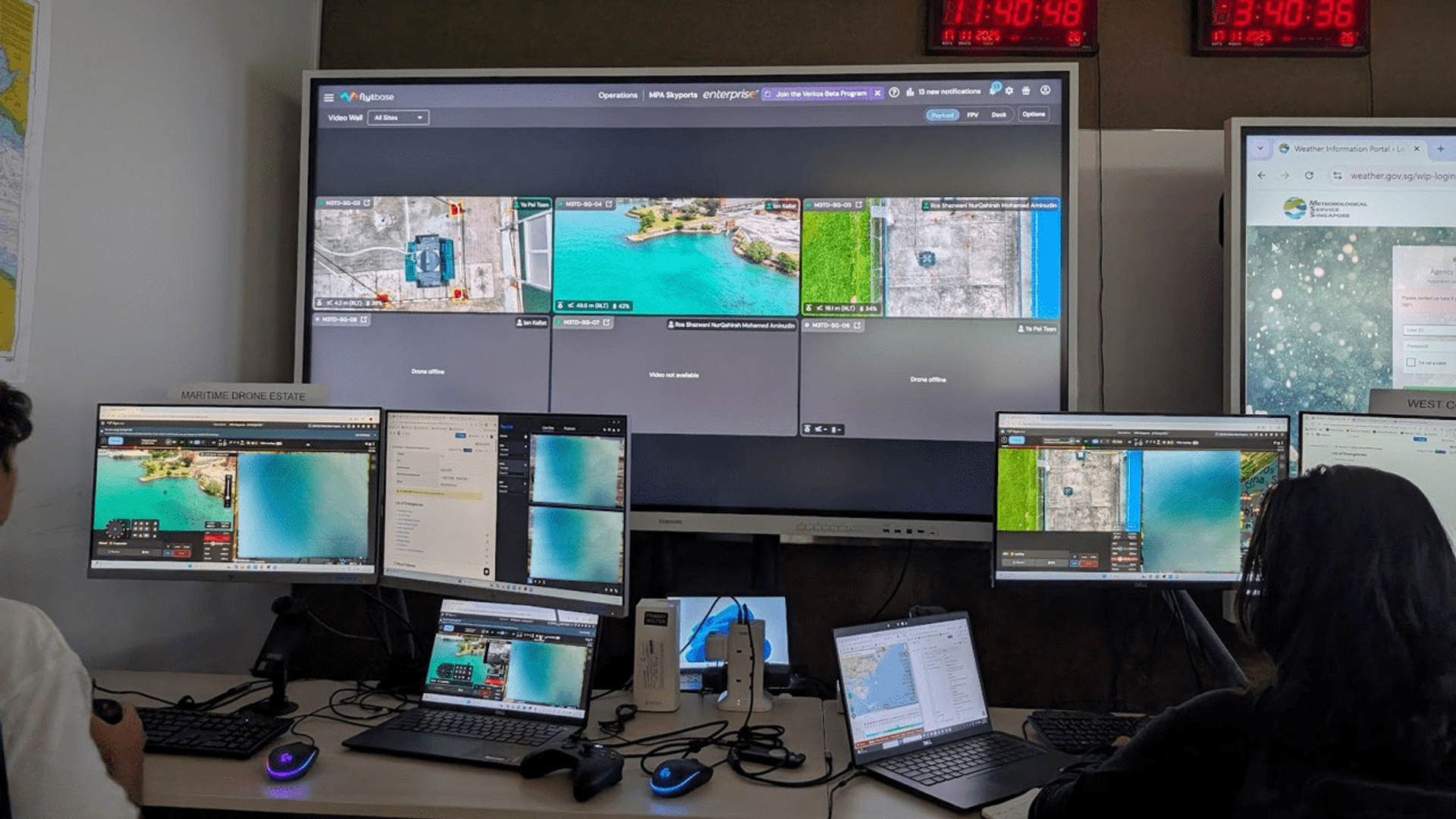
Scaling from a few remote flights to a routine operational capability also requires software that can coordinate aircraft, missions, and operators across multiple locations. Platforms like FlytBase provide that operational layer, enabling organizations to centrally manage autonomous drone fleets, schedule missions, monitor drone docks, and oversee distributed operations from a single interface.
The Bigger Shift for Port Operations
The biggest change is not that drones fly farther or launch faster. It is that aerial surveillance becomes available whenever it's needed.
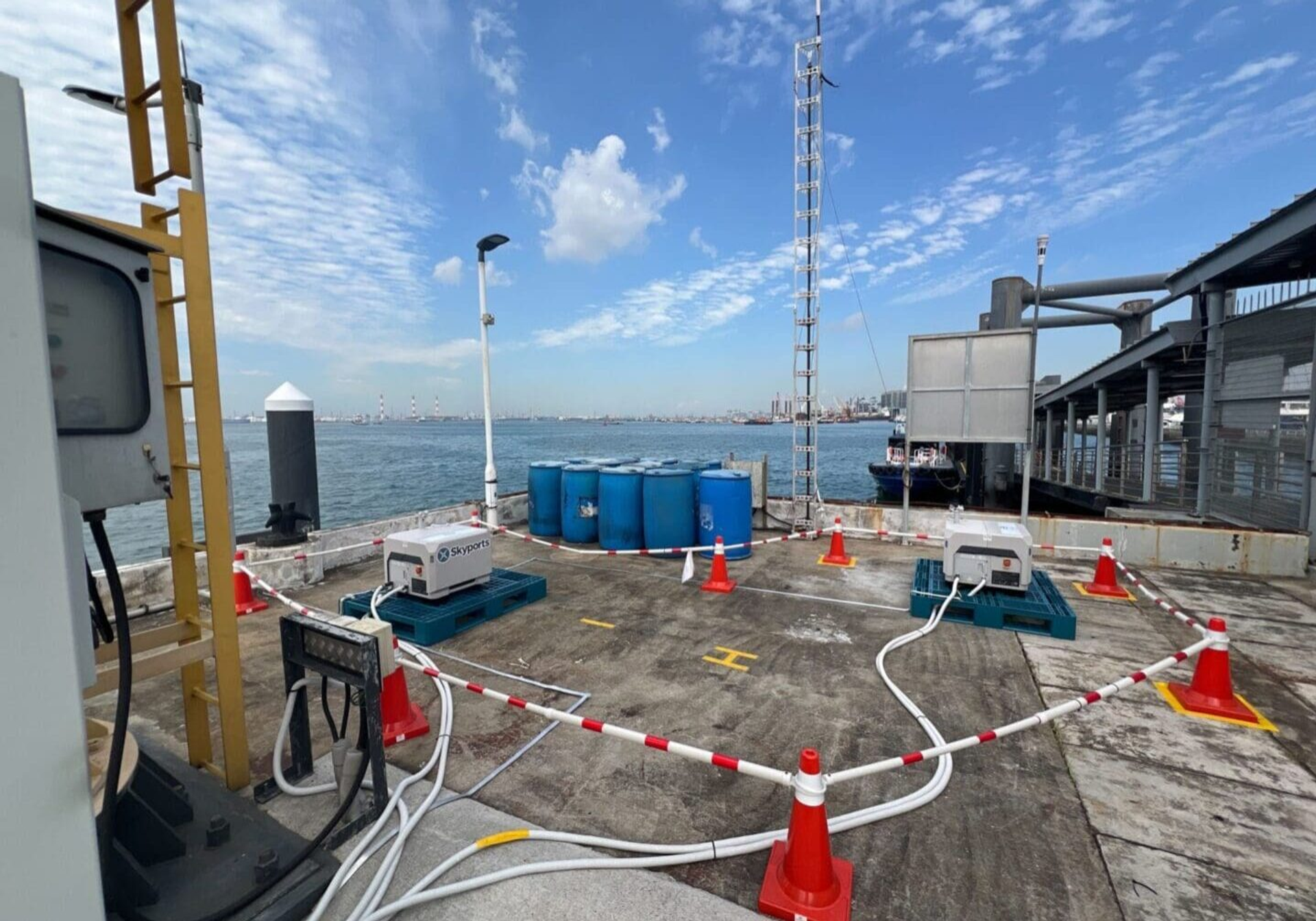
Instead of launching a drone only after an incident is reported, operators have routine aerial coverage that helps them detect events earlier, verify situations faster, and direct patrol resources more effectively. Recent deployments have also expanded the role of autonomous drones beyond surveillance to include infrastructure inspections, environmental monitoring, and public communication during incidents.
Singapore's experience shows that scaling autonomous drone operations isn't about flying more drones. It's about building an operating model where routine monitoring, rapid incident assessment, and crewed response work together seamlessly.
For ports evaluating similar initiatives, that's the real lesson. Autonomous drones deliver the greatest value when they're no longer treated as individual flights, but as part of everyday operations.
Source: Skyports Drone Services, Maritime and Port Authority of Singapore (MPA) Case Study: https://skyportsdroneservices.com/mpa/