
For many police departments, deploying a drone still begins with sending people. Before aerial intelligence can support an incident, operators must travel to the launch site, prepare the aircraft, and get it into the air. Those extra steps can delay situational awareness when every minute matters.
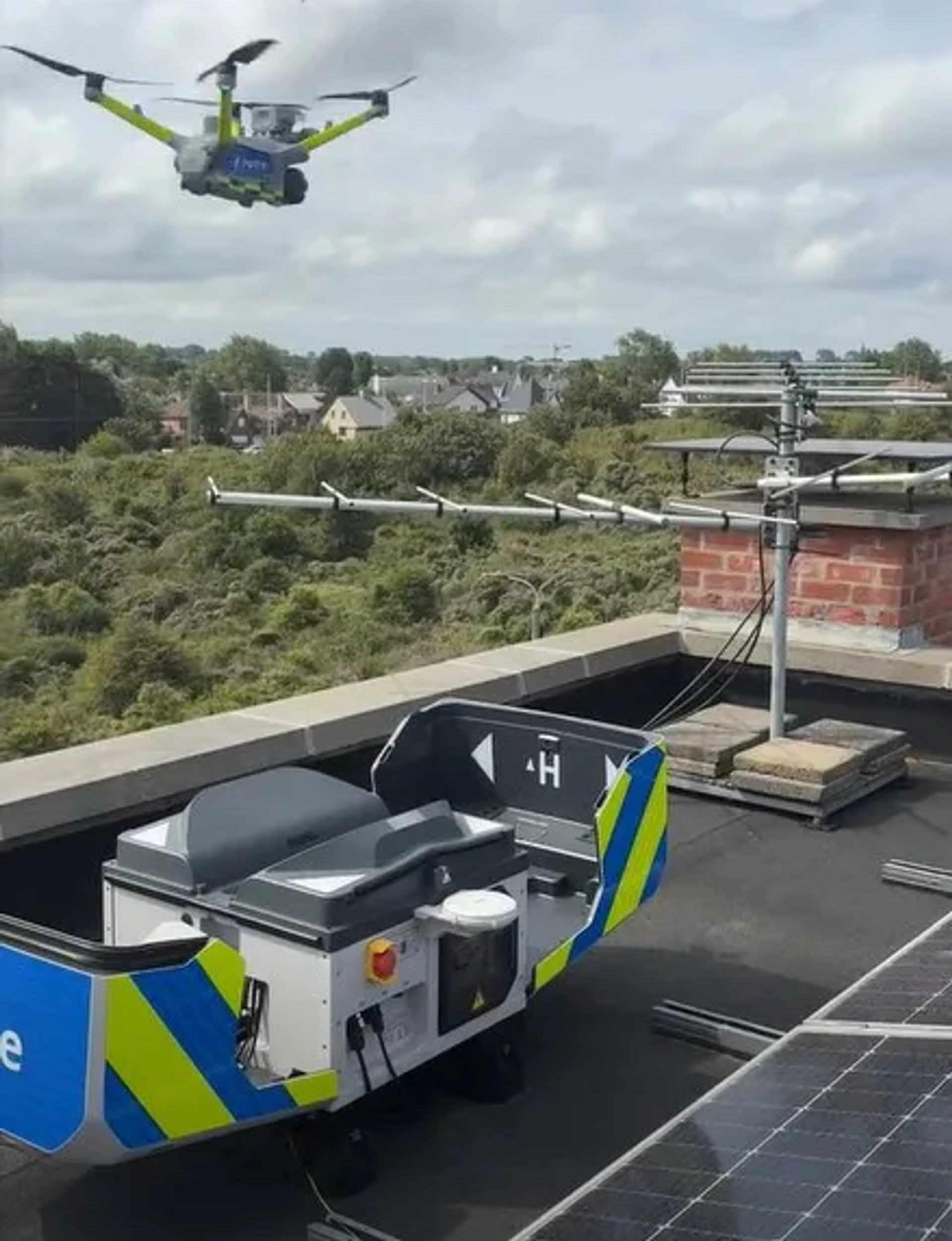
Belgium's Westkust Police is testing a different operating model. The department is evaluating a drone-in-a-box system that autonomously launches from a secure dock installed in the coastal dunes. Instead of dispatching a drone team to the scene, operators can remotely launch the aircraft and begin assessing an incident almost immediately.
Responding Before Resources Are Deployed
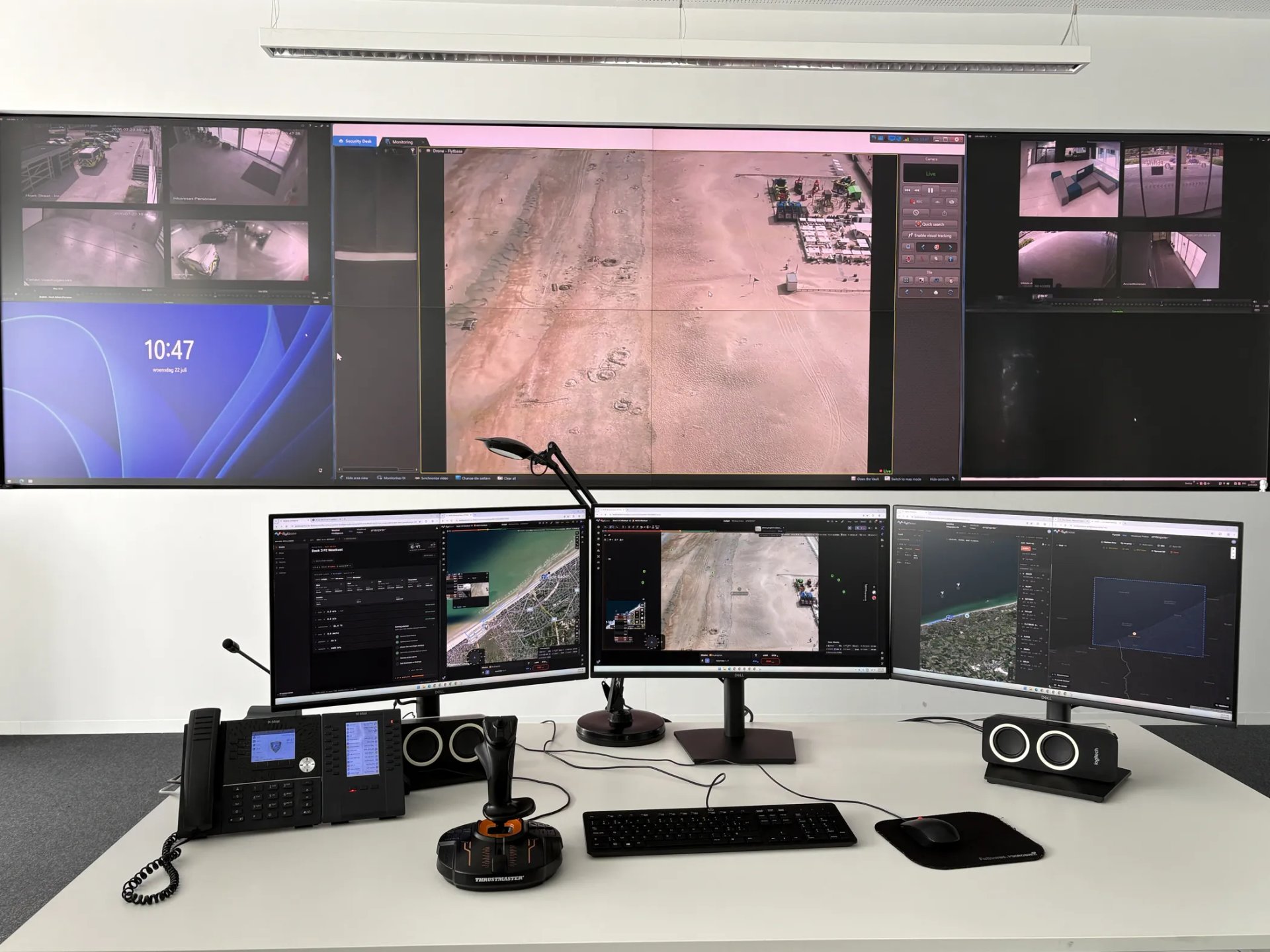
According to Deputy Police Chief Christiaan De Ridder, the biggest advantage is time. The drone can be operated from the police headquarters or another approved location, allowing officers to understand what is happening before deciding how to respond. Live video is streamed to the Real Time Intelligence Center, where it can also be shared with emergency services and other public agencies. When operators are working away from the command center, they can also access the system through a virtual reality interface that recreates the operational environment.
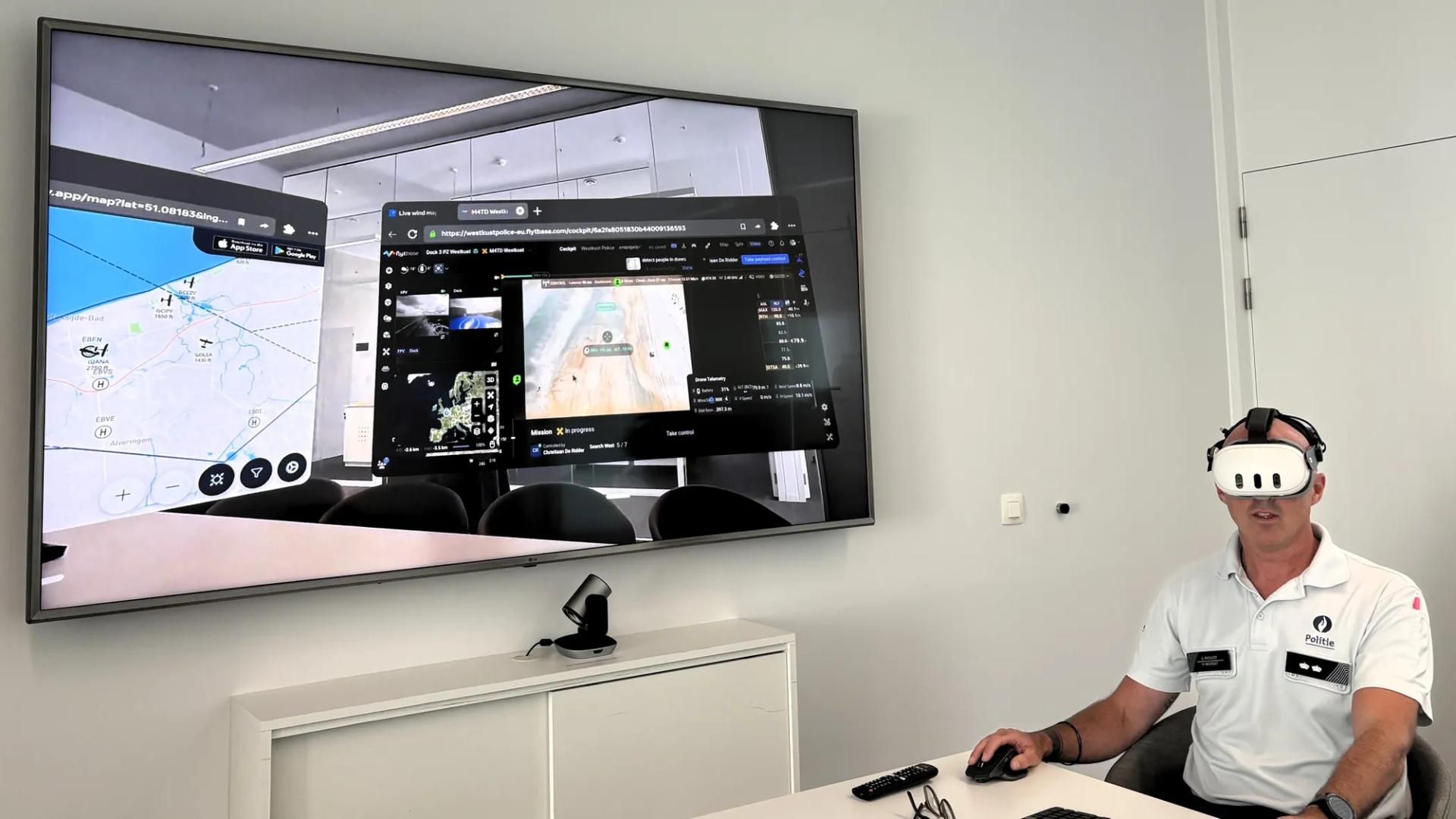
That early visibility helps responders make better operational decisions. Instead of automatically sending additional personnel, officers can first verify the situation from the air. If there is no immediate danger, the fire department does not need to be dispatched. Municipal services are only notified when additional action is required. The result is not only faster response but also more efficient use of public safety resources.
Supporting Coastal Surveillance
The system is also being used for nighttime coastal surveillance. Equipped with a thermal camera, the drone scans beaches and dunes for suspicious activity linked to irregular migration across the English Channel. AI-assisted detection alerts operators when groups of people or potential crossing equipment are identified, allowing patrol officers to respond directly to the reported location.
While the trial has not yet resulted in any migrant detections, it has demonstrated another important operational lesson. Automated detection can quickly identify potential activity, but human operators remain responsible for verifying alerts and deciding whether intervention is necessary.
A Different Way to Operate Drone Programs
The Westkust Police trial highlights an operational shift that extends beyond a single deployment. The value of autonomous drones is not limited to faster takeoffs. It comes from making aerial intelligence available earlier in the response process, giving officers better information before resources are committed.
As more public safety agencies evaluate drone-in-a-box deployments, they also need a way to manage aircraft, docks, missions, and operators across multiple locations. Platforms like FlytBase provide that operational layer, helping agencies centrally manage autonomous drone operations while integrating aerial intelligence into everyday emergency response workflows.