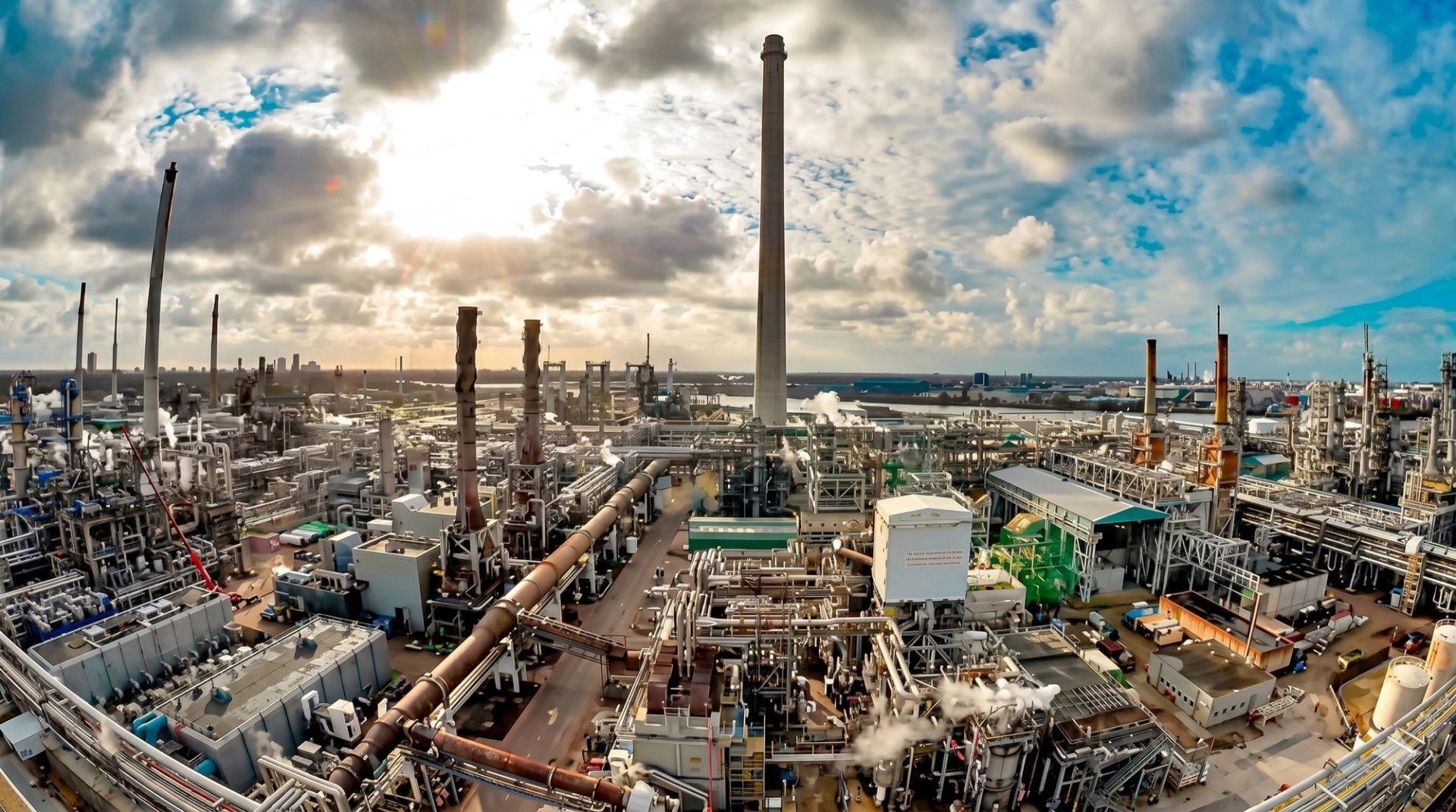
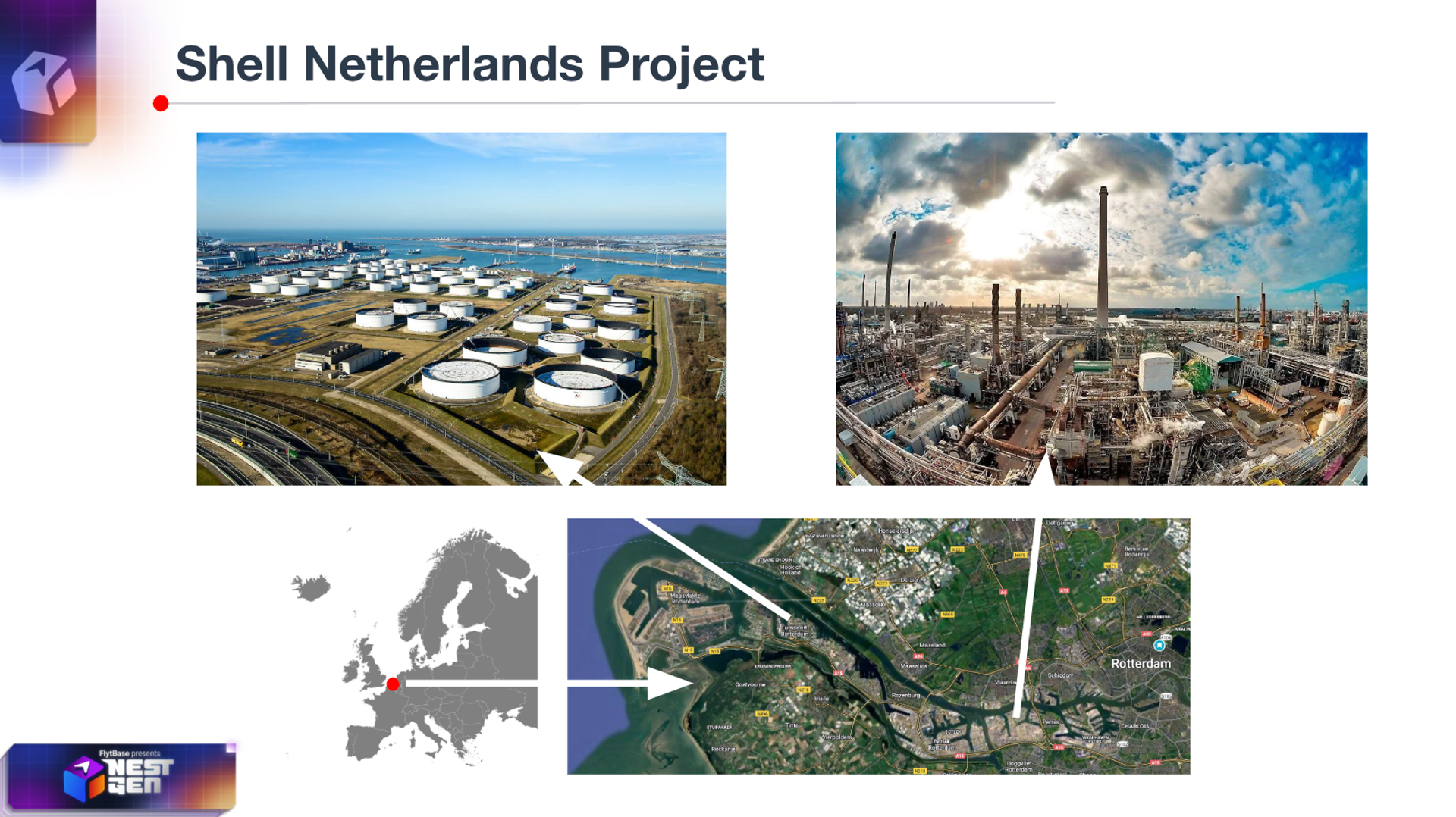
Shell Petroleum operates some of Europe's largest oil processing and storage facilities in the Netherlands, including extensive tank farms at Europort and a major refinery at Pernis spanning approximately 30 kilometers of Rotterdam's harbor area. As a global energy leader, Shell has been pioneering the integration of advanced technologies to improve operational safety and efficiency across their high-risk environments.
During a session at NestGen ‘25, we heard from Pieter Franken, QHSE and Compliance Manager at Skeye Netherlands, and Vincent van Schijndel, CEO of DroneLand Netherlands. They shared insights on how Shell Petroleum has implemented autonomous drone monitoring capabilities at their Rotterdam facilities.
The challenge
Shell Petroleum faced several critical operational challenges at their Rotterdam facilities:
- High-Risk Environment Management: Oil and gas facilities contain numerous hazardous zones where safety and security are paramount concerns, creating significant risks for personnel conducting routine inspections.
- Inefficient Manual Processes: Regular mandatory inspections, such as checking for water on tank roofs (required twice weekly), were labor-intensive and time-consuming, pulling valuable personnel away from more critical tasks.
- Complex Regulatory Compliance: Operating in densely populated industrial zones near Rotterdam Airport's controlled airspace necessitated navigating strict aviation regulations and obtaining multiple permissions for drone operations.
- ATEX Zone Restrictions: Explosion-proof zones throughout the facilities created no-fly areas that required precise navigation planning and redundant safety systems to ensure drones would never enter these zones, even during emergency return-to-home procedures.
The solution
Shell Petroleum partnered with Skeye Netherlands (drone operations) and DroneLand Netherlands (hardware provider) to implement an autonomous drone monitoring system using DJI Dock technology across their Rotterdam facilities. The solution integrates specialized hardware, software, and customized operational protocols to enable remote monitoring of critical infrastructure.
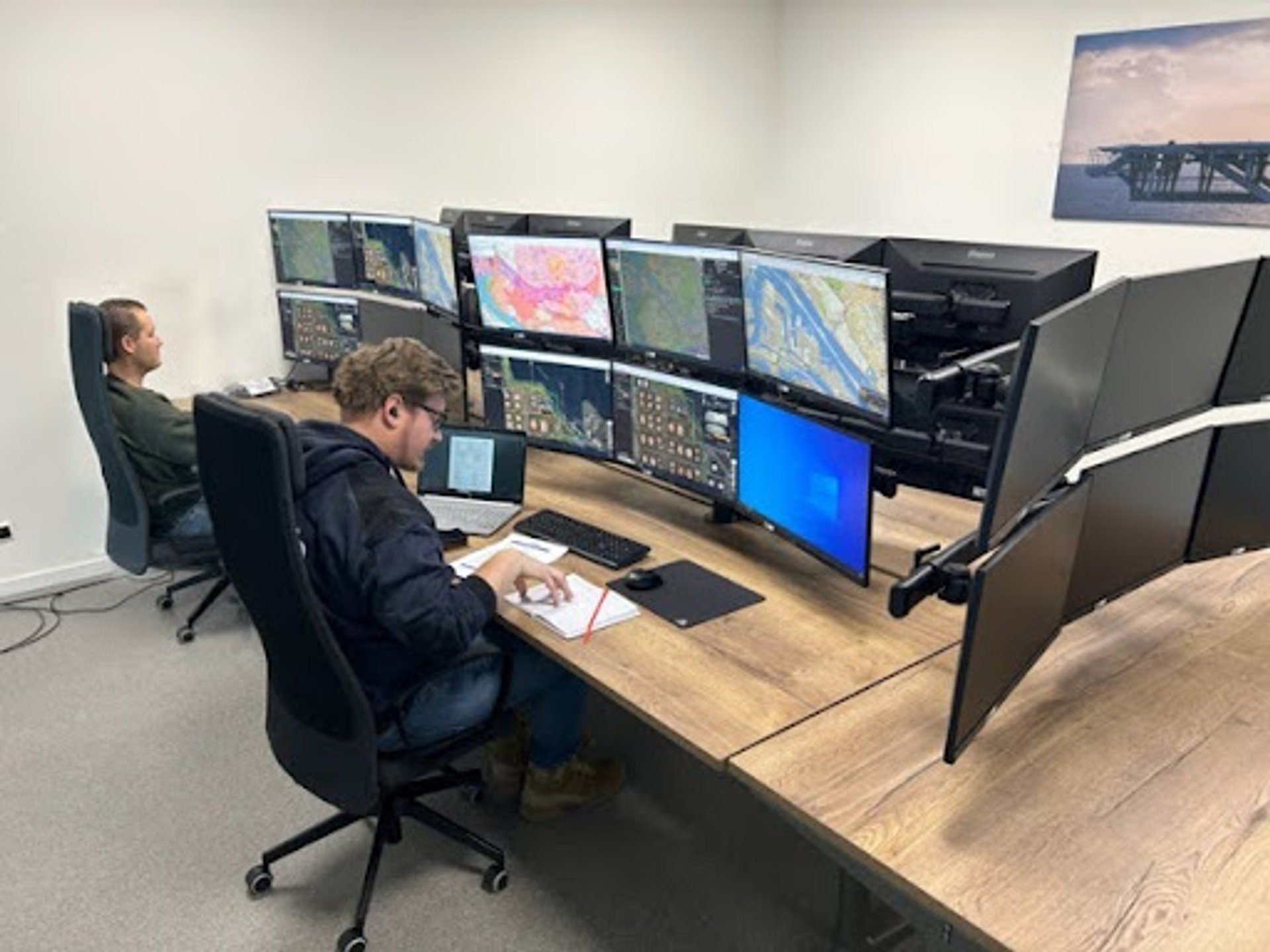
The implementation features multiple DJI Dock systems positioned strategically throughout Shell's Europort tank farm and Pernis refinery. These drones operate on predetermined flight paths using 3D mapping technology to navigate the complex industrial environment safely. The entire system is monitored and controlled from Skeye's remote operations center, where trained pilots conduct flights over LTE/4G connections without needing to be physically present at the facilities.
How it works
Operators create detailed flight plans in a 3D environment that accounts for all facility structures and ATEX zones, ensuring drones never enter restricted areas. Flights are conducted from Skeye's operations center where pilots use multiple screens per workstation to monitor drone telemetry, camera feeds, and environmental conditions.
Drones capture thousands of images monthly during routine inspections of tank roofs, valves, and other critical infrastructure. After collection, images are transferred to Shell's servers where machine vision models analyze each photo to identify potential issues. Results are delivered to operators in the control room via Shell's UTL system, allowing for quick response to any detected problems. When incidents occur, the system can immediately deploy drones to provide situational awareness to emergency responders.
Implementation
The implementation process spanned approximately 6-7 months to obtain all necessary permissions and overcome regulatory hurdles.
"It took about six to seven months before we had all these new permissions in place. And we operate also within the controlled airspace of Rotterdam Airport, which causes some other challenges." said Pieter Franken, QHSE and Compliance Manager at Skeye Netherlands
Before deployment, Skeye conducted rigorous testing of various drone systems, subjecting them to extreme conditions by intentionally disconnecting power, interrupting internet connections, and forcing return-to-home procedures. Only systems that passed these stringent tests were considered for deployment at Shell facilities, ensuring they could operate safely in the complex industrial environment with minimal risk.
The implementation required creating detailed 3D models of all facility areas to enable precise flight planning. Additionally, specialized training programs were developed for pilots, as Skeye found that existing BVLOS training facilities lacked practical experience with the specific requirements of industrial drone operations.
The results
The drone-in-a-box solution has been operational for over a year with "extremely little downtime in terms of weather downtime, technical downtime, or regulatory downtime," said Pieter Franken
This reliability has enabled Shell to make significant progress toward their "rounds by exception" philosophy, where personnel only need to physically inspect areas when issues are detected. The solution has reduced manual inspection routines and replaced twice-weekly tank roof inspections.
Enhanced safety by significantly decreasing personnel exposure to hazardous areas and identifying potential leaks through specialized sensors. During incidents, drones provide immediate aerial views for emergency response. Expanded data collection has enabled proactive maintenance and earlier detection of issues by creating a rich dataset.
The way ahead
Shell Petroleum is already expanding their drone operations from the current 12-hour daily schedule to a full 24/7 operation. "At the moment, we're ramping up to twenty-four hours a day with five drone-in-a-box systems on-site," explained Pieter Franken.
This requires training approximately 16 additional pilots. Future plans include integrating with intrusion alarm systems, exploring relaxation of ATEX zone restrictions through spark testing, and increasing cybersecurity with on-premise solutions ensuring data remains secure on controlled servers.
Conclusion
Shell Petroleum's implementation of drone-in-a-box technology represents a significant advancement in industrial facility monitoring, demonstrating how autonomous drones can enhance safety, improve operational efficiency, and reduce human exposure to hazardous environments. The successful deployment at their Rotterdam facilities provides a model for other industrial operations seeking to leverage drone technology in complex environments.
"For 2025, we plan to scale up the use of drones and really harness the value out of the sky. From emergency response to asset protection, do any of our ad height inspections." said a spokesperson from Shell Petroleum
Frequently asked
Q1. How do autonomous drones navigate safely in complex oil and gas facilities?
The drones utilize detailed 3D mapping and RTK positioning technology to navigate precisely through complex industrial environments. Flight paths are carefully planned to avoid ATEX zones and obstacles, with redundant safety systems ensuring drones never enter restricted areas even during emergency return-to-home procedures.
Q2. What regulatory approvals are needed for drone operations at industrial facilities?
Operations require approvals from aviation authorities (EASA in Europe), often necessitating special licenses like the LUC for BVLOS flights. Additional permits are needed for controlled airspace operations, and compliance with governmental regulations and company-specific safety protocols is essential.
Q3. How do autonomous drones operate in adverse weather conditions?
The selected drones have high wind and rain resistance, operational limits exist but systems are designed to maximize uptime in varying weather scenarios, ensuring reliable data collection year-round.
Q4. What cybersecurity measures protect sensitive industrial data collected by drones?
The system is moving toward on-premise deployment where all flight control software and data processing occur on secure, local servers ensuring sensitive industrial data never leaves the controlled environment and meets strict cybersecurity requirements.