
Along the Baltic Sea, seconds decide survival. When an emergency call reports a person drowning, traditional response workflows in Kiel, Northern Germany take 10 to 12 minutes before rescue boats are in the water. In many cases, that window is too long.
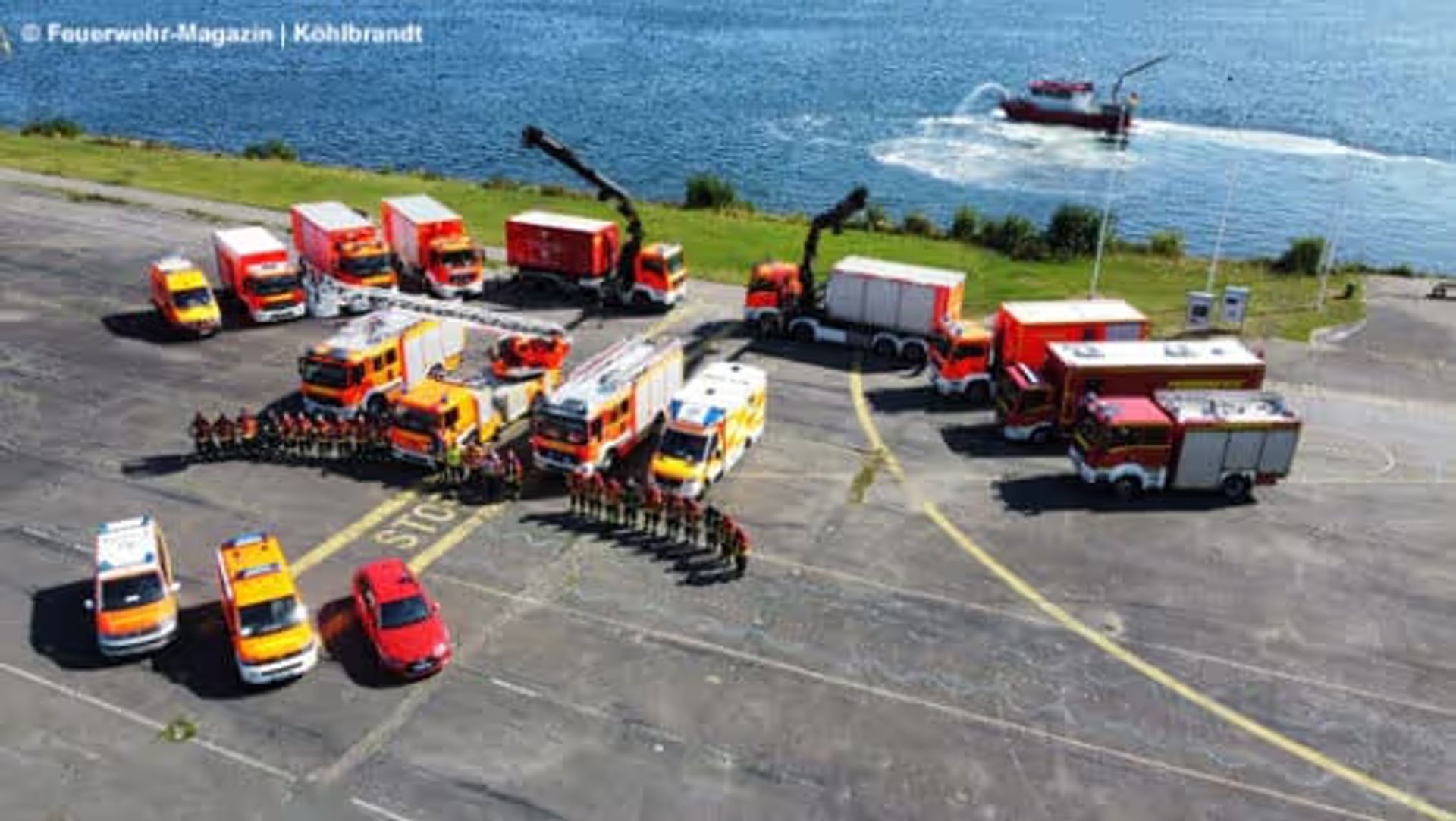
BF Kiel, the Professional Fire Services Department responsible for protecting 250,000 residents across the city and coastline, needed a way to see the scene before ground units arrived. Early aerial visibility meant faster victim location, better resource deployment, and fewer blind spots.
Manual drone operations were not enough. Early hardware offered 20 minute flight times, required pilots to travel to beaches, and often arrived after firefighters. The drone became a documentation tool rather than a first responder.
In 2024, BF Kiel turned to FlytBase, the enterprise autonomy platform for unattended, mission critical drone operations, to answer a question many emergency agencies now face: how do you turn drones into first responders rather than support tools.
The challenge
BF Kiel’s emergency workflow was limited by three core issues.
1. Response Time: Reaching a drowning victim required dispatching units, firefighters gearing up, driving to beaches, and deploying boats. This took 10 to 12 minutes. In cold and windy Baltic waters, drowning victims rarely have that much time.
2. Location Uncertainty: Callers rarely provide precise locations. Typical reports included statements such as "someone is drowning about 200 meters east of where I am standing." Without aerial visibility, responders faced large search areas with no defined entry point.
3. No Situational Awareness Until Arrival: For fires, traffic accidents, or major event incidents, commanders relied entirely on ground personnel for the first visual confirmation. This created delays in escalation and often led to either over deployment or delayed response decisions.
As Drone Program Manager Daniel Ritter explained, "Persons at risk of drowning do not have those ten to twelve minutes, and we often do not even know exactly where they are."
BF Kiel needed an autonomous system that could launch within minutes of a call, operate beyond visual line of sight, and deliver real time intelligence to commanders before firefighters arrived on scene.
The solution
BF Kiel began with a controlled test at Kieler Woche, a ten day sailing festival that brings more than three million visitors to the city. The streets are congested, and rapid intelligence is crucial.
With a single DJI Dock 2, FlytBase provided the autonomy layer that:
- Connected directly with BF Kiel’s emergency dispatch software
- Enabled drone launches within seconds of a 112 call
- Managed BVLOS operations within an eight kilometer radius
- Streamed live video to responding units
- Maintained full GDPR compliance through EU based servers
A Defining Incident
During the festival, a temporary bridge partially collapsed with more than ten thousand people nearby. Ground responders required approximately five minutes to move through the crowds. The drone arrived in under one minute, confirmed no trapped persons, and prevented a full multi unit response. This validated the role of autonomous drones as first responders.
Daniel explained, "The emergency call center had a view of the incident before I was even there. No people in the water, no one trapped, and we avoided sending multiple units."
How it works
Today, BF Kiel’s emergency workflow integrates autonomous aerial response directly into its 112 system.
Step 1: Emergency Call Received: Dispatchers determine whether aerial support is useful for drowning, structure fires, traffic incidents, or location ambiguity.
Step 2: Automatic Deployment: Ground units are dispatched, and the drone is triggered through FlytBase’s Go to Location feature using coordinates from the caller or dispatcher.
Step 3: Rapid Launch: A pilot approves the mission, as required by EASA regulations. DJI Dock 2 launches in less than sixty seconds.
Step 4: Real Time Video Distribution: RTSP or guest links stream video directly to fire chiefs, boat crews, and incident commanders.
Step 5: En Route Mission Updates: Pilots can send grid search patterns, orbit missions, or wide area scans while the drone is airborne.
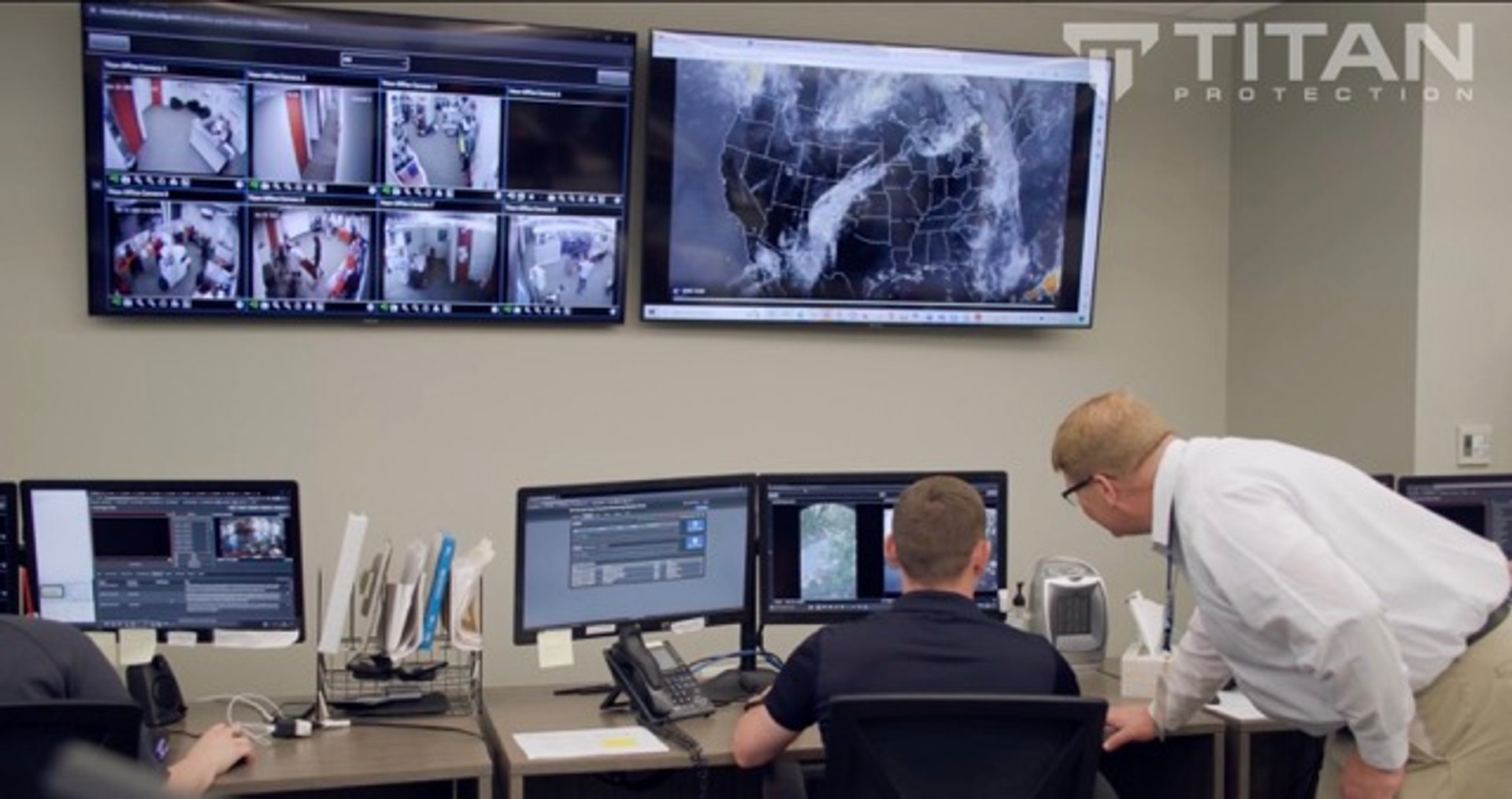
Step 6: Airspace Monitoring: Three workstations in the command center manage drone control, video feeds, and airspace awareness with SafeSky and DRONIC TREX.
Step 7: GDPR Compliant Handling: Live video is not recorded. Images taken on scene for documentation are stored locally and never retained in the cloud.
Implementation
Stage 1: Manual Operations
From 2019 to 2023, BF Kiel used manual drones to understand operational gaps and the potential impact of faster aerial response.
Stage 2: Proof of Concept:
A single dock deployment during Kieler Woche demonstrated reliable autonomous response in crowded, high pressure environments.
Stage 3: Regulatory Preparation
Daniel coordinated with police, airspace authorities, and airport operators over three to four months to ensure full compliance with BVLOS regulations and local policies.
Stage 4: Pilot Training
Pilots require A2 certification, five to ten hours of supervised practice, an internal proficiency check, and ongoing flights every three months. BF Kiel discovered that new pilots adapted faster to autonomous control than recreational drone pilots with pre existing habits.
Stage 5: Operational Deployment
Once the system proved stable, BF Kiel expanded usage to water rescue, fire assessment, traffic accidents, and crowd events.
Stage 6: Future Scaling
Plans include 24/7 operations, a third dock covering remaining outskirt regions, and AI assisted detection for persons in water and smoke classification.
The results
In less than two operational seasons, BF Kiel recorded measurable, quantifiable improvements across every stage of emergency response.
60 to 70 Percent Faster Water Rescue Response
- Before: 10 to 12 minutes for boats to reach the scene
- After: 3 to 5 minutes for autonomous drone arrival
- Time saved: 5 to 7 minutes of critical rescue window
This is the difference between search and recovery in Baltic drowning incidents.
5 Times Faster Arrival at Major Incidents
- Drone arrival during bridge collapse: under 1 minute
- Ground responder arrival: about 5 minutes on foot
- Speed improvement: 5 times faster
- Impact: prevented dispatch of 6 to 8 emergency vehicles during a high-density event
201 Square Kilometers of Coverage Per Dock
- Effective operating radius used by BF Kiel: 8 kilometers
- Area covered per dock: approximately 201 square kilometers
- Kiel’s total city footprint: 118 square kilometers
- Docks required for full coverage: 3 docks cover about 98 percent of the jurisdiction
The way ahead
BF Kiel is building one of the most advanced autonomous emergency response networks in Europe. Planned upgrades include:
- Full 24/7 coverage
- Third dock deployment for near complete jurisdiction coverage
- Seasonal beach deployments for summer drowning operations
- AI powered detection for persons in water and smoke column identification
- Improved coordination with police, hospitals, and rescue helicopters
- Future reduction in launch approval time as regulations evolve
Daniel summarized their philosophy: "We will always send units. The drone does not replace people. It gives them the information they need faster than ever."
Conclusion
BF Kiel’s collaboration with FlytBase redesigned the first minutes of every emergency. Their response shifted from ten minute blind entry to three minute aerial intelligence delivery. Ground teams now arrive informed, prepared, and significantly faster.
FlytBase provided the autonomy layer, DJI Dock 2 delivered reliability, and BF Kiel delivered the vision to use drones as true first responders.
This case demonstrates that autonomy in public safety strengthens responders by giving them the information advantage needed to save lives.
Frequently asked
How does BF Kiel use FlytBase?
FlytBase powers emergency dispatch integration, mission scheduling, BVLOS operations, telemetry, and secure video streaming.
What regulatory approvals were required?
BVLOS approvals under EASA, plus coordination with police, airport authorities, and airspace control. Manual authorization is still required for each takeoff.
What outcomes were achieved?
Response time reduced from 10 to 12 minutes to 3 to 5 minutes, more than 95 percent readiness, 201 square kilometer coverage per dock, and multi incident usability.
Can this model scale?
Yes. BF Kiel’s workflow provides a template for fire, police, and EMS agencies seeking to deploy autonomous drone as first responder systems.