
Founded in 2018, Ibn Firnas Drone Center is Oman's sole authorized DJI distributor and the country's first Civil Aviation Authority-licensed drone training academy. Integrated within Tadoom's technology ecosystem and backed by Omantel's national network, IFDC delivers end-to-end drone programs across government, security, oil and gas, utilities, and construction sectors.
This deployment is IFDC's most geographically demanding program to date: three simultaneous drone-in-a-box systems, spread across hundreds of kilometers of Omani territory, serving a government client that required continuous construction monitoring without continuous field staffing.
The challenge
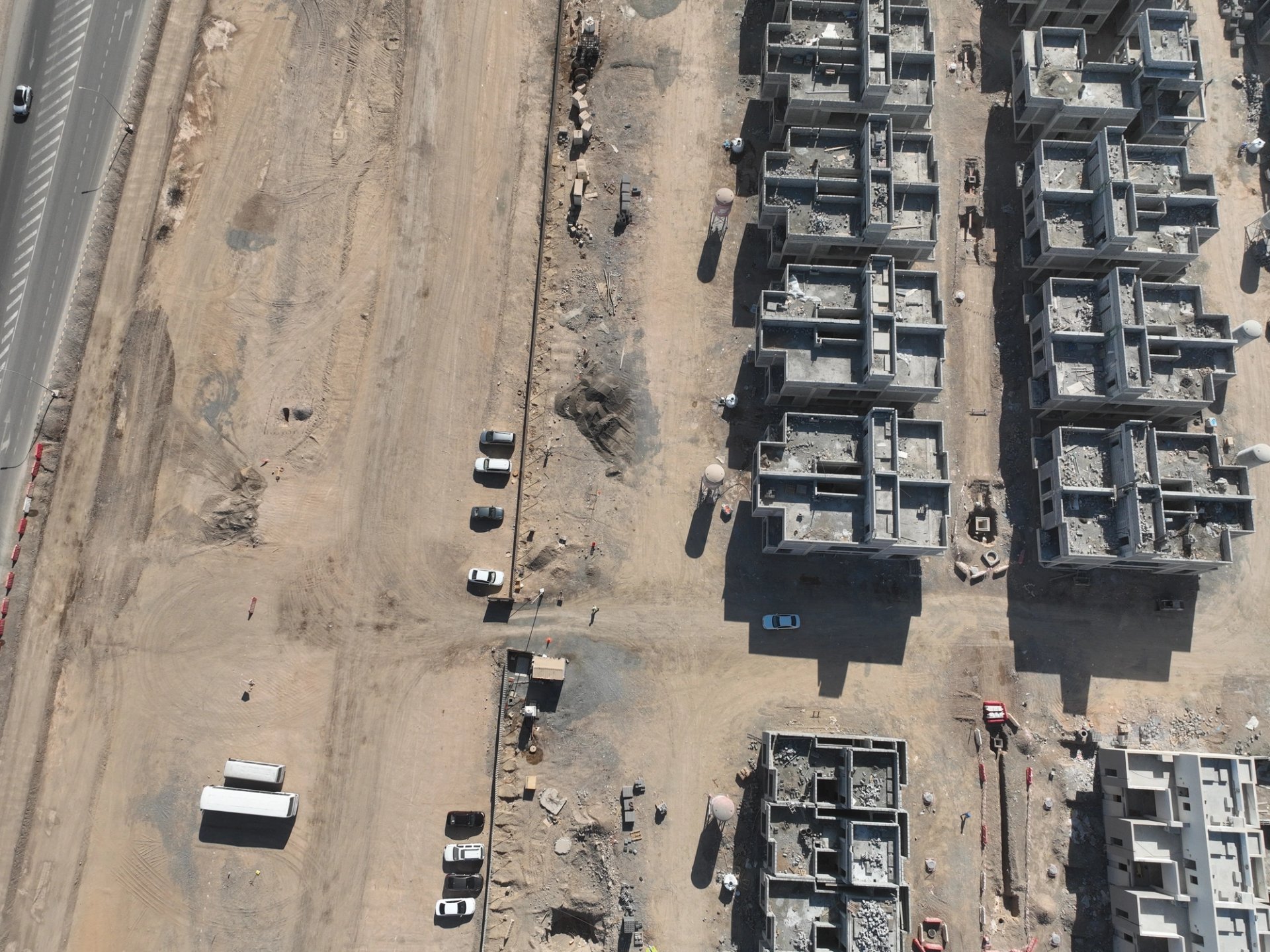
The client, a government construction authority in Oman, was managing major construction across three sites, far apart, with decision-makers located nowhere near any of them. Every piece of site intelligence had to be physically collected, manually compiled, and transmitted before anyone with authority could act on it.
- Pilots had to be on-site for every flight. Deploying licensed pilots across three remote locations simultaneously was not economically or operationally viable. Aerial coverage was limited to scheduled visits, leaving the sites unmonitored in between.
- Reporting consumed two hours per site, per cycle. Site personnel captured imagery manually, compiled it, wrote reports, and transmitted them to stakeholders hundreds of kilometers away. By the time reports arrived, site conditions had already moved on.
- HSE violations went undetected between inspection rounds. Manual walkthroughs could only cover part of a large active site at any time. The window between a violation occurring and a supervisor being informed was wide enough for unsafe situations to escalate.
- No independent contractor verification. The client was required to verify third-party contractor progress but had no means to do so without relying on those same contractors to self-report. Recurring theft and HSE non-compliance made the need for independent, operator-controlled site intelligence urgent.
The solution
IFDC deployed three DJI Dock 3 drone-in-a-box systems across the three sites, integrated with FlytBase for autonomous mission management and Verkos AI for real-time detection. All three sites are controlled from a single remote operations hub via Starlink satellite connectivity. No pilot is required at any location.
DJI Dock 3 was the hardware choice because of the mountain deployment. One site sits at high altitude with temperature variation and terrain conditions that earlier dock generations were not rated to handle consistently.
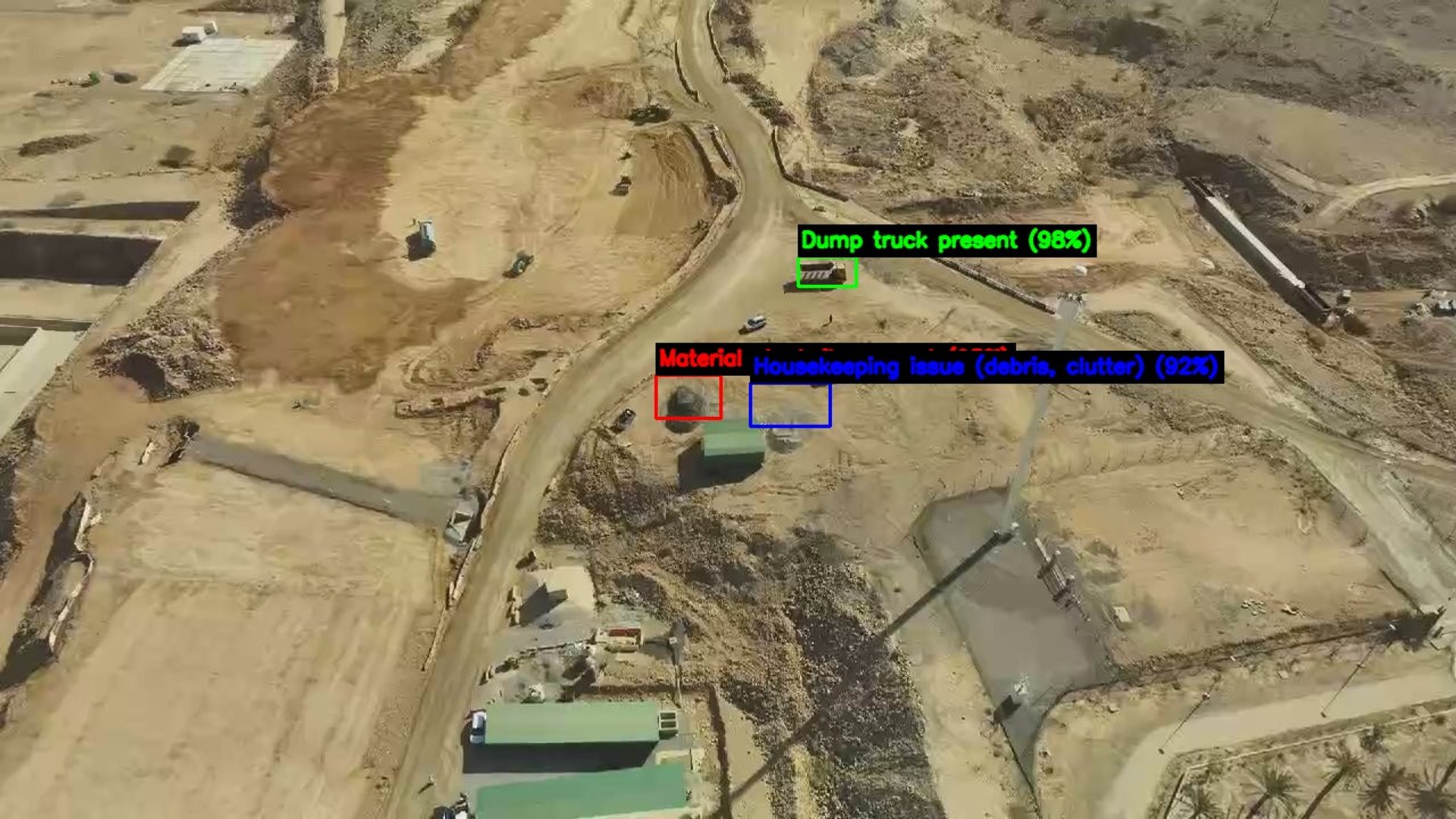
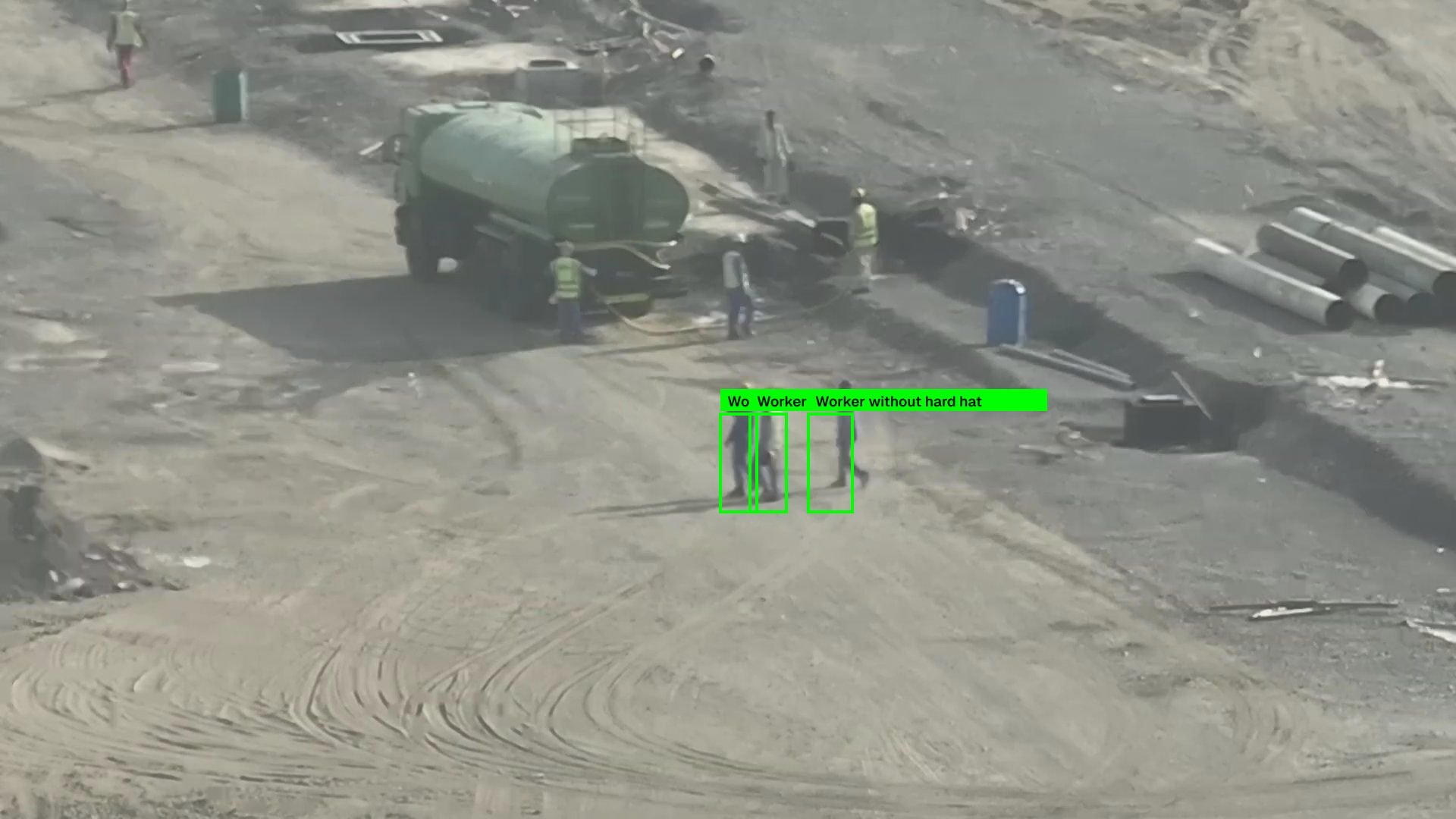
Verkos AI changes how HSE compliance works in practice. During patrol flights, it analyzes the live video feed continuously and pushes detections to the operations hub in real time, while the drone is still in the air. The supervisor can act on a violation as it happens, not hours later when an inspection report arrives.
The deployed technology stack:
- DJI Dock 3 autonomous drone-in-a-box systems, one per site
- FlytBase platform for mission scheduling, remote execution, and fleet management
- Verkos AI for real-time HSE and security detection
- Starlink satellite connectivity across all three sites
- Cloud-based infrastructure, with on-premises migration underway
How it works
Every mission is initiated from the remote operations hub. The DJI Dock 3 opens, the drone launches, executes the mission, and returns to recharge without anyone at the site doing anything. Four distinct mission types run across the program:
- HSE compliance patrols send the drone to pre-defined waypoints in high-manpower zones. Verkos AI monitors the live feed throughout, flagging violations such as missing PPE, unsafe proximity to machinery, and unauthorized zone access as they occur. Alerts reach the operations hub before the drone lands.
- Heavy machinery safety monitoring covers equipment operation zones, identifying hazards and unsafe movement patterns across areas too large for ground-based inspection to reliably cover.
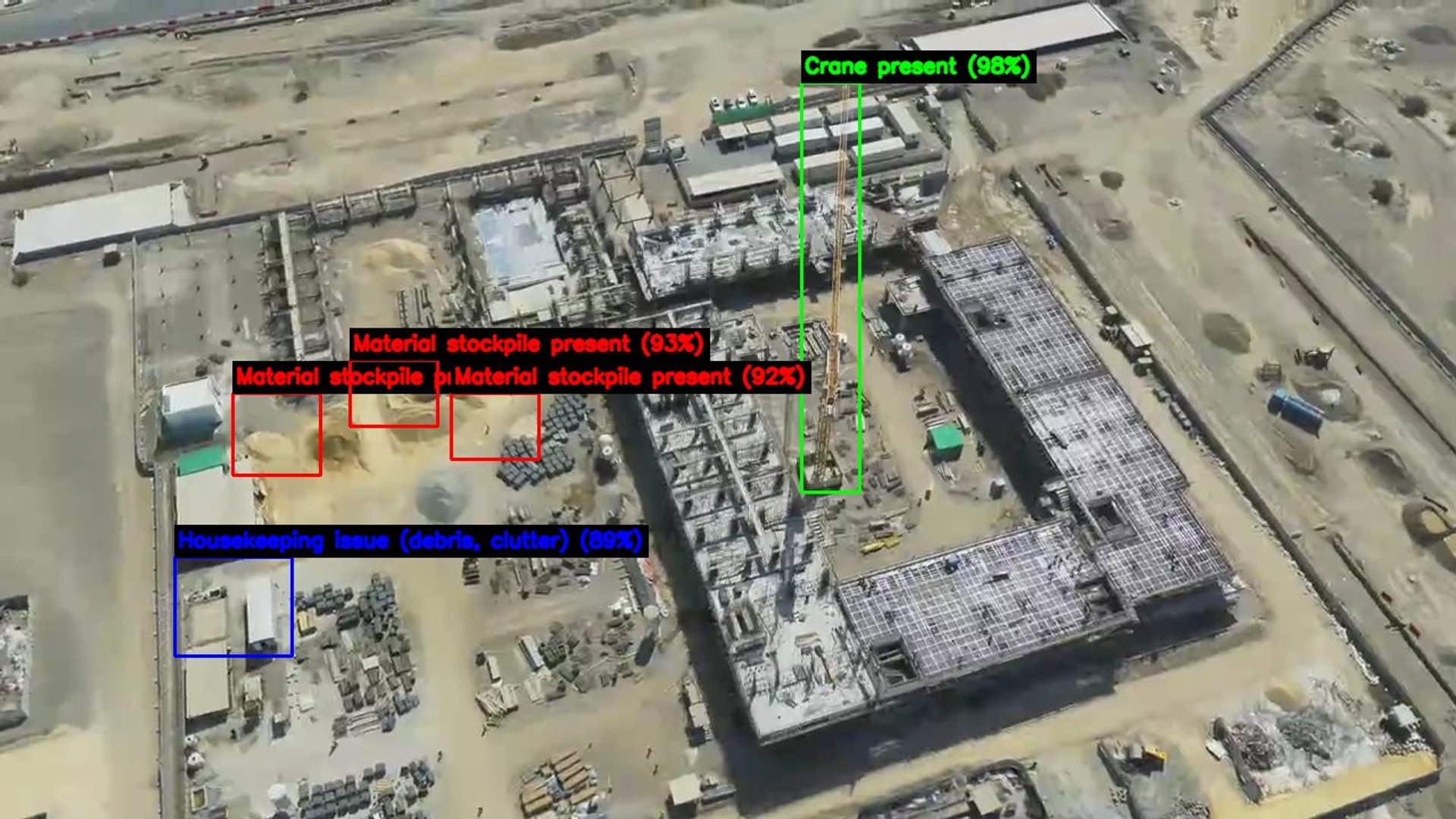
- Progress reporting missions fly to pre-defined high-interest locations and capture panoramic imagery at each point. The output reaches government stakeholders within fifteen minutes of mission completion, replacing a two-hour manual process with an automated mission output.
- Night security patrols cover storage areas, machinery parking zones, and site perimeters on a scheduled autonomous cycle. No on-site staff required. When each mission ends, the drone returns to the dock, recharges, and the next mission queues automatically.
Implementation
Regulatory approvals were secured before hardware was procured. Operating autonomous drones over government construction sites in Oman required clearance from both the Civil Aviation Authority for BVLOS and autonomous operations, and the National Security Authority given the sensitivity of the sites. IFDC's established relationship with both bodies, built through its role as the CAA's first licensed training facility, was what made the approval process achievable within the program timeline.
Connectivity planning also came before procurement. The mountain site had no viable cellular infrastructure for real-time command and control. IFDC identified Starlink as the solution during site assessment, and all three sites were equipped with Starlink terminals as part of the base deployment. The mountain site subsequently achieved the same uptime as the other two.
The program launched at one site in September 2025. Running a single site first let IFDC and the client validate all four mission types, refine the operational parameters, and build confidence in the system before committing to the full configuration. After observing site one in operation, the client requested expansion to sites two and three. No proposal was required.
The results
- 87% reduction in stakeholder reporting time. What previously required two hours of manual effort per site now takes fifteen minutes. The report is no longer something someone is asked to produce — it is a direct output of missions that were already running on schedule.
- 90 minutes to under 30 per HSE inspection zone. With Verkos AI processing the live feed during every patrol, detections reach the operations hub while the drone is still airborne. The interval between a violation occurring and a supervisor being alerted is now a matter of flight time, not inspection scheduling.
- 2–3 hours down to under 60 minutes for night patrol coverage. Off-hours security across all three sites runs as a scheduled autonomous mission. The theft incidents that preceded the deployment were a direct consequence of limited after-hours monitoring. That gap no longer exists.
- Client expanded from one site to three. After observing site one performing in production, the client asked IFDC to expand the program. That decision required no pitch and no commercial incentive — it is the most credible form of validation available.
The way ahead
The on-premises migration currently underway addresses the remaining infrastructure requirement for government-scale deployment. Starlink and cloud operations proved the model quickly and enabled a fast go-live. On-premises brings all operational data fully within Oman's national infrastructure, satisfying data sovereignty requirements for more sensitive government programs that cloud configurations cannot serve.
With three sites validated and a documented operational playbook in place, the replication pathway is clear. A second government program starts from a known baseline rather than a discovery process. The regulatory relationships, hardware configuration, connectivity architecture, and mission profiles are all established. The next deployment will move faster and cost less than the first.
Conclusion
Three government construction sites across Oman, managed from a single hub, with no pilots in the field. Nine months of operation, 300+ autonomous missions, 99% dock uptime, and a client that tripled the program without being asked.
The constraints in this deployment were real: remote and high-altitude terrain, dual-authority regulatory approvals, satellite-only connectivity, and government data requirements. IFDC resolved each one before go-live. For government agencies and drone service operators in the GCC considering autonomous construction monitoring, this program is not a proof of concept. It is a running reference.
Frequently asked
How does autonomous drone monitoring compare to traditional manual inspection for distributed construction programs?
The core difference is structural rather than incremental. Manual inspection requires a licensed pilot to be physically present at each site for every flight. For locations spread hundreds of kilometers apart, that travel obligation is the primary cost and scheduling constraint. The IFDC deployment removed it entirely. Three sites are now covered from one hub, monitoring frequency has increased, and field staffing requirements have not.
What infrastructure does autonomous drone operation require in remote and high-altitude terrain?
IFDC uses DJI Dock 3 systems with Starlink satellite connectivity across all three sites. Cellular coverage was not a viable option at the mountain location. Confirming the connectivity solution during site assessment, before any hardware was purchased, was the decision that prevented a far costlier post-installation problem.
What regulatory approvals are required for autonomous BVLOS operations over government sites in Oman?
The program required approvals from both the Civil Aviation Authority for BVLOS and autonomous operations, and the National Security Authority given the government nature of the sites. IFDC's position as the CAA's first licensed drone training facility provided the regulatory standing and working relationships needed to complete both processes within the program timeline.
How does the system support independent contractor oversight for government clients?
Every mission produces timestamped, GPS-tagged imagery logged automatically through FlytBase. The mission schedule is set by the IFDC operations team, not by any party on the ground. The result is an objective, auditable record of site conditions on a regular cycle that no contractor can influence.